Showing posts with label children's literature. Show all posts

Tuesday, January 27, 2015

Looking to the Stars

Growing up in Vermont, like many of us who grew up in rural places, I have always been drawn to looking up at stars. There is just something about gazing up on a clear summer night and seeing a sky filled with sparkling stars that is universally appealing. Of course children love learning about the stars, imagine seeing them again for the very first time. They are pretty amazing. When I came across this book while looking for something else, I knew instantly that I was going to love it. I love Marla Frazee's illustrations and they go beautifully with Mary Lyn Ray’s story about stars of all kind.


I first read this book last year with my class of two and three year-olds before I moved up to teach in the preschool classroom. I was worried it would be a bit too wordy for them and while a few book-lovers really connected with it, I knew it was a bit better suited to preschoolers. This year, most of those little guys from my former classroom have moved up and joined me in preschool, and so I brought the story out again. It was a huge hit this time around, especially with the kids who remembered when I read it with them last year. Stars has been on our classroom book display for over a month now and we've featured it twice as our circle time story already, and the kids regularly ask us to read it with them again. Of course I am happy to oblige, I could read this book with them a thousand times and not tire of it. Each time we read it, a new conversation results from something the story and its illustrations conjured up.


When I brought this story out last month, my classroom was deep in the midst of an obsession with magic and fantasy. It made sense then, to go with the kids’ interest and follow up story-time, with a make-your-own-magic-wand activity. We had just featured King Arthur’s Very Great Grandson the week before and made paper crowns. This was one of our most popular activities to date and left the whole class playing royalty for the rest of the afternoon, so my co-teachers and I knew that a wand-making activity would be well received. We cut out a stack of paper stars, offered up some glitter to make them sparkle, helped the kids glue them to a stick and tied a few colorful ribbons around the top. Suddenly each child had an invitation to transform into something magical for the day. Just like with the paper crowns, it was beautiful to watch the creativity and depth of play that was born out of such a simple DIY accessory project.

The second time we read Stars at Circle Time, I chose to make small stars to keep in your pocket, “like your best rock,” (M. L. Ray) except that it was winter and good rocks were hard to come by. The laminated paper stars I went with were a bit of a flop compared to how I imagined the activity would have gone over, had we been able to head outdoors in search of the perfect rocks to paint and keep forever. Regardless of what activity you and your children come up with, this is a beautiful book to read together, with limitless potential for follow-up activities that could tie into any number of subjects, from outer space to emotions to fantasy fiction and more.  

Sunday, January 18, 2015

Becoming a Birder


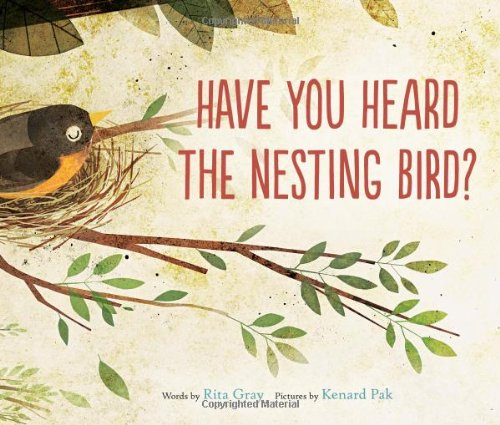
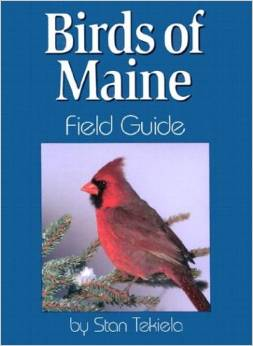
I have read Have You Heard the Nesting Bird, by Rita Gray, a few times now with my class and it has quickly become a favorite for all of us. The kids love it because they get to hear me make funny bird noises and they don’t have to sit quietly while I read it. The story is short and sweet, it has some rhyme and a lot of rhythm to it, and the illustrations are beautiful and interesting. This story led to a great conversation where each kid shared a few of their favorite or recent experiences with birds. And after only a few reads, the kids have learned the names and corresponding calls of a handful of common birds, many of which we’ve seen right out the windows of our classroom. We are lucky that our classroom has big windows and a patch of forest to look out on, so birds are a common sight. Since we started reading this story together, the kids in my class have taken a keen interest in the local wildlife and have finally started to regularly peruse and refer to the Maine Field Guide I brought in months ago.


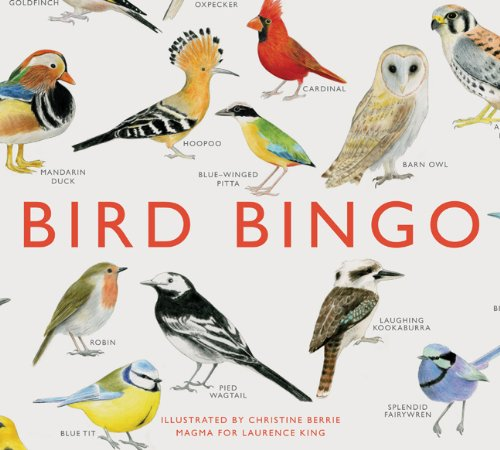
The first time I read the Nesting Bird (which is a Robin), I offered a game of Bird Bingo as a follow up activity, and just like the book, the game has quickly become a favorite in our room. The illustrations are beautiful and since we've started playing, the kids have significantly expanded their naturalist vocabularies and can recognize a whole slew of new birds, many of which even I hadn’t known before being introduced to this game. Bingo is a great way for kids to practice important social skills like cooperation, organizing others, following the rules of a game, and turn taking. A specialty bingo game, like this one also provides a fantastic way for kids to connect with and deepen an interest they have developed. Back in Seattle, one of the boys in my preschool class was fascinated by dinosaurs and brought in his dinosaur bingo game. We offered it as an activity in our science area and there was one of the most popular choices at work time. After a few weeks of playing this game regularly, we all were able to name and classify tons of different kinds of dinosaurs, many of which again, I hadn’t been previously familiar with.

There are many different picture books featuring birds that would likely provoke similar interests in the subject of ornithology, such as Birds by Kevin Henkes, or Counting Is for the Birds by Frank Mazzola, Jr., to name a few. I happened to come across the Nesting Bird at my local library, completely by accident, and because I have a personal interest in birds, and I had been dying to find an opportunity to introduce our bird bingo game, I pulled it out one day after we spotted a bright Blue Jay out the window. Months ago I had set my Maine bird guide on the window sill near the science area with a pair of binoculars to accompany it, but the kids had taken little notice, only occasionally flipping through the book and usually using the binoculars for dramatic play games. After we read the Nesting Bird in our circle time meeting, I reintroduced the field guide and the kids finally started using it regularly, seeking out the birds they know, pointing out their favorites, and asking me to read the names and feeding/migration information provided on each bird’s profile page. So we can keep building on this growing interest in birds, I requested, and quickly received from our school's director, a bird feeder to hang outside our window. I can’t wait to get hung and see what kinds of visitors will provide us with the opportunity to catch a glimpse into their aerial world.

Monday, January 6, 2014

Stone Soup

I have been teaching with this story for years, starting way back when I was first working as a summer camp and after-school counselor in high school and college. In fact, I can't even remember which group first introduced the story of Stone Soup to me, but whomever it was, I am grateful for the introduction. If you've never read this story, go pick it up and read it the next chance you get. It is a beautiful story about coming together as a community, opening your heart and working together for the common good. There are many versions of this classic tale, but I am partial to author and illustrator, Jon J. Muth's version, mostly because I think his gentle watercolor style so perfectly brings to life the feelings in the story. I personally just love all of his work, but Marcia Brown's version is also really great. Just before Christmas, I had the chance to share this story with my class and although they are just a bit young for it, I couldn't resist and at least a few of them really got into it and that's good enough for me. I asked the group at the end what they liked best and while some loved the illustrations, just as I do, many of them pointed out different veggies and ingredients featured in the soup as their favorite part. Since I am always looking for a chance to incorporate food into my curricula, I was naturally thrilled.

Whenever I share one of my favorite books with a class, I always pay attention to the bits and pieces they connect with the most and do whatever I can to bring those pieces to life, weaving them throughout the rest of the curriculum. With this story, I have often had each of the kids pick an ingredient to bring in and we've made stone soup together in a crock-pot as a class and enjoyed it for our lunch, which is always a huge hit. Cooking projects are one of my favorite ways to bring a story to life because they are so multi-sensory and therefore leave a much larger imprint on one's memory. With a story like this one, highlighting the strong messages of community and open-mindedness, I definitely want the memory to stick. I also love to cook with kids because they are usually fascinated by the process and eager to participate. Because I feel so gypped from not learning more (or much of anything) about food in school when I was young, I want to cultivate this interest as much as possible in my students. It baffles me that growing and preparing food, something so crucial to human culture and survival gets so neglected in most schools, but I suppose I'll save my feelings on the subject for another time because I could go on and on and I don't want to get off track from Stone Soup... If you are interested, however, check out my Kids in the Kitchen pinboard for more inspiration in food education.

Felt carrot, asparagus, and purple sweet potato I made for little K back in HI
Anyway, since my kiddos happened to be drawn to the ingredients involved in making stone soup, I thought, perhaps I will use this as an opportunity to finally develop a set of felt food for our play kitchen. Since not all of the kids were interested in this story, that tells me that instead of sharing it with the group as our circle-time read, I will next time offer to read it in the book nook with those who are interested, as a choice during our open work time. Most of the kids will wander over and listen at least for a little while each time I read it, while others will savor it again and again. Whatever their preference, all of them will inevitably be exposed to the ideas in the story as they work their way through the rest of the curriculum. By stocking our play kitchen with felt versions of the ingredients in the story, the kids will have the chance to incorporate Stone Soup into their play, and this has so many benefits from literacy development, to deepening their knowledge of food and the process of creating meals, to bringing the important message of community to the center stage, not to mention the exposure to different cultural groups in the mountains of the Himalayas. I think I'll take it one step further and capitalize on my class's budding interest in using scissors and invite them to practice cutting out pictures of food in magazines to glue down to a paper plate, making their own "stone soup" that they can take home. I swear, a few good stories can be a teachers best friend and savior, I don't know what I'd do without them.

Thursday, January 2, 2014

A Very Busy Season

Now that I'm teaching full time again, I'm remembering how exhausted I get after spending all day in the classroom. While I may not have time to keep up with my posts as regularly as I would like, I still want to share what I've been working on, so until I can find the time to write more, I'll be sticking with more photo documentation. Here's a sneak peak at what we've been up to this holiday season...

We've started making a weekly batch of homemade play dough and the kids have really gotten into it. Perhaps it's because we skipped on the food coloring, but the kids have focused all of their play dough energy into baking. They started out right away pretending to be making pancakes describing to me all their favorite toppings for this beloved breakfast food including syrup, strawberries, blueberries, whipped cream, etc. I am always one to encourage a person's interest in food and cooking, as it happens to be a personal passion of mine, so I jumped at the chance to share one of my favorite Eric Carle stories with our group. It's a longer and more wordy story so instead of sharing it with the class as a whole during one of our circle time meetings, I offered it as one of the choices during our morning work time (aka free play) session. A few of my regular story kids chose to come join my in the book nook for a reading and liked it so much that I ended up reading the book more times than I can count throughout the day and following weeks. It was incredible to see how the story added volumes to their play dough creations, giving them the language to describe what they were making and the understanding of the process of making actual pancakes from scratch. As the holidays drew closer, I came across Amy Rosenthal's story and shared it with my kids, offering them holiday cookie cutters to their play dough tools and a bunch of nutmeg to the batch so it smelled like cookies. The last day before Christmas vacation started, we re-read the cookie book and made our own batch of moon shaped sugar cookies following the recipe printed at the end of the story. As we were mixing the cookie dough, the kids all crowding around and anxiously awaiting their turn to mix the dough, they noticed how similar it was to the process of making play dough. Next step to expanding their knowledge of the many uses for flour, fresh, hand-rolled pasta and a good old Strega Nona story.

Behind the playdough display, you'll notice my classroom's play kitchen. To further bring these stories to life, I plan to start working on some pasta and pancake felt food to add showcase in the kitchen, along with the appropriate play tools for making them, like a pot and colander and a frying pan and spatula. We also have a variety of different kinds of dried pasta in our sensory table currently for the kids to explore. You can check out my inspiration for projects on the Welcome to My Classroom pinboard, and find more inspiration for bringing food into focus in early education on my Kids in the Kitchen pinboard. While the kids were busy playing with playdough, I was working on some seasonal, simpler felt projects that I got out just in time for our very snowy Christmas season here in Maine. Hope all of your Holidays were as filled with enjoyment as ours were.

I cut and sewed together a handful of simple felt ornaments and offered them alonside a rather large felt tree which I set out as one of our daily table activities during the few weeks leading up to Christmas so that our little 2 and 3 year olds had a tree at school that they could decorate however they pleased. The project was a big hit and the kids loved watching me stitch up the ornaments and making suggestions on what I should make next for the tree. 
Here's the tree all decorated, the kids always insisted that the star go on top :)
The success of the felt Christmas tree inspired my co-teacher and I to set up a permanent felt board in our classroom. We put it in the story corner as an alternative quiet time activity, since not all of our kids are interested in looking at books all the time, and there are many times, like right after snack when we are cleaning up before transitioning into either getting dressed for outside, or an indoor session of group movement activities like yoga and dancing. So to start off our felt board, I threw together some basic shapes so the kids can build snowmen on the days its too cold or rainy to build them outside. A few of the girls in my group were interested in the activity while I was making it and were psyched when I asked for advice on what to make next. They asked me for "green feet" and "yellow arms" and hats and extra eyes, and lips. So far the snowman felt board has only been out for 2 days but it's been a big hit and I can't wait to get started on the next board themed, "Space & Sky."

Snowman Decorated Felt Board
Basket of Snowman Parts

Thursday, August 29, 2013

Encouraging Future Scientists

Little C, transfixed by the movement of the water and colorful rocks beneath it

How do you get more kids interested in math and science? This was the question posed to me in a conversation this weekend about education after I made my claim that standardization and high stakes testing are boring students out of pursuing math and science careers. Being an introvert, I froze up on the spot and my response was pretty long winded and ended up as more of a general introduction to the Reggio Approach and the difference between what I do and how science is traditionally taught in schools. But I didn't really say much about my actual science curriculum and what it looks like in practice and I have been thinking about how to better answer the question all week. So today I flipped through all of my documentation folders for some good examples of how I "teach" science in my preschool classrooms and what I do to keep kids interested in these important subjects.

I spent one morning with a group of toddlers smelling, naming, touching, and looking at a rosemary bush in the back garden patch during outside time at Bella Mente. This impromptu lesson on plants was the result of little L's curiosity about this big green thing beside her, inspiring each of her classmates to have a smell. Engaging all of the senses is a great way to figure out how each of my students learns most effectively.

Back in Hawaii, K and I learned about the local farm flora by exploring the pigeon pea bush. She preferred a more hands on approach, working her fine motor skills by plucking the peas from their pods. We got in a great vocabulary lesson along with our science as K inquired about the name of each part of the plant and practiced saying leaf, pea, pod, bush, branch, and more as she pinched the pods carefully to get her pea.

Learning distance and landscape was something my buddy little E was particularly drawn to, he loved to look at maps and took great pride in his ability to name the places he recognized. Each time we brought out the world map he always showed me where Africa was, followed by England and Seattle. Here he's trying to find our school on a map of our neighborhood, West Seattle, Washington. He had a blast showing me all his favorite places as we looked over the streets together, naming them and putting his memories on the map.

Here is another example of a day when maps were one of the provocations set up on the science table but little E was onto something else and little M barely noticed the maps, fascinated instead by the magnetic sand boxes, first examining them, then manipulating the magnetic sand with a magnet wand. I always set up multiple materials and ways to explore them so there are options speaking to a number of different interests.

When the kids in my 4s class seemed a bit bored with our typical outdoor options one day, I pulled out a sensory table and filled it with birdseed  and these two practiced scooping, dumping, and measuring, and learning the physics of a water wheel. Later we observed from the other side of the window as the crows came to feast. I try to seek out activities with multiple dimensions because they tend to draw in more students and allow for more chances to inspire learning. Not everyone wanted to play with the birdseed when we were outside but many who didn't were thrilled to watch the birds gather to feed on it later on. 

The school age kids couldn't seem to get enough of math when we introduced the woodworking table where they also learned valuable lessons about the concepts of balance, weight, adhesive strengths, texture, and so much more. But best of all, they had so much fun stretching their imaginations and bringing their ideas to life. These kinds of hands on activities that engage multiple senses are a fantastic way to reach kids who just don't learn their best seated at a desk. They're learning the same concepts but their senses are awakened and engaged in all new ways from the smell and feel of the wood in their hands and the sounds of hammering and working with tools. Through the application of math and science concepts they understand their relevance.

On this particular day at the block table a few boys were experimenting with height, testing the impact of using the different shape blocks, trying to figure out which blocks or combination of blocks would make the tallest tower. They worked hard, challenged their patience, and experienced the thrill of discovery in the end. I asked, as I often do, to share their hypothesis, which blocks they thought would win out, I don't remember their specific response but through narrating their process I taught them the language of the scientific method.

There are so many ways for kids to learn scientific and mathematical concepts but most importantly I want them to learn how to think like scientists so whatever they don't learn from me or other teachers they will have the motivation and capability to resolve their queries for themselves. I've found that when I observe my kids carefully and play alongside them frequently they will show me exactly what they are most motivated to learn, making my job of curriculum planning a whole lot easier if I pay attention to their cues. Joining my buddy little N in observation of the tadpoles, we told each other what we liked about frogs and shared our ideas on why some of the tadpoles seemed to be growing faster than the others. Our conversation inspired research on what frogs eat and the details of their natural ecosystems. And in retrospect now I would have shared that interest with the class by reading a story like Mo Willems's City Dog, Country Frog, and  reach across disciplines again to paint a frog using water colors just like Jon J. Muth does in the illustrations. The possibilities for scientific exploration and discovery and are endless in any environment and once I got in the habit of looking for them, I started to wonder why anyone ever bothered with the traditional methods of lecture and test when this is so much more effective and a million times more fun for both my students and myself. Now that I've discovered the benefits of an emergent curriculum, I am in love and I will never go back.

Friday, August 9, 2013

Hello from the Forest

find this story on Amazon.com here

A whole month has gone by since my last post... woops! Time flies in the summer time and this month has been a busy one. Lots of travel, lots of friends and families, a month-long art and nature summer camp, and a much needed respite from the daily routines that had started to wear me down. But, I'm am back refreshed and revitalized and ready to share lots of goodies and stories I've collected over the past few weeks. To start out, I'd like to share a book I stumbled across at the library one morning as I browsed for stories to share with my 4-6 year old campers. Although this powerful and important book is on the longer side, the story and illustrations held onto everyone's attention and the web-of-life concept kept most campers involved in a lively discussion long after I put it down.

The story starts with a young girl discovering that her cat had gone missing during the night and as she heads off into her beloved forest to investigate, she finds his collar and a few patches of fur on the ground. Suddenly, the girl is introduced to a side of wildlife she had not yet encountered and though it frightened and saddened her, she set out to understand it, and in turn the world, a little bit better. The author takes what could be a traumatizing and grim experience for a child and invites children to understand both sides of the predator-prey relationship.
Having the river in the forest as our playground made it easy for the kids to take what they learned in the classroom the world at large. Out here we came across a painted turtle, craw fish, wild mushrooms, and birds of all kinds to observe.
With my particular group, this story opened up conversation about losing pets and the emotions and rituals that surround dealing with death. It also invited children to share what they know about the food chain and what kinds of animals eat what. We talked about how although it seems mean that a mountain lion or wolf might have eaten the girl's cat, that each animal has a family to feed and are designed differently so that there is enough food for everyone. One child in my group suggested that if all animals ate grass there wouldn't be any grass left. Even though the children were sad for the girl and the loss of her feline friend, they were able to look beyond their sadness at the grander picture of life. These are important concepts that are often avoided with younger children because of their seriousness, but I have always found that children are never credited enough for their ability to both understand and work through even the most complicated emotions and concepts when guided and supported by loving adults and peers.

Depicting their new-found knowledge of birds via drawing
Following our reading and discussion, the children headed off to the art table to investigate and animal pictures in the National Geographic magazines I had brought in and many of them made collages of their favorite animals, pointing out the herbivores versus the carnivores. Other children gathered around the computer to watch episode three of this BBC documentary about birds, exploring how their beaks are uniquely shaped to suit their diet. Other children headed outside to do a bit of bird watching with the binoculars I had brought in while others grabbed one of the many non-fiction animal and nature book on display in our classroom. I also set out the story on the art table with some paper and markers for children as an art provocation and a few sat down to draw animals and forest scenes of their own. All in all, I was pleased with the fun and learning that was born out of this story and I can't wait to read it again with another group. If you have ever read this one with a child or class, I'd love to hear stories of the discussions, projects, and inquiry that resulted.